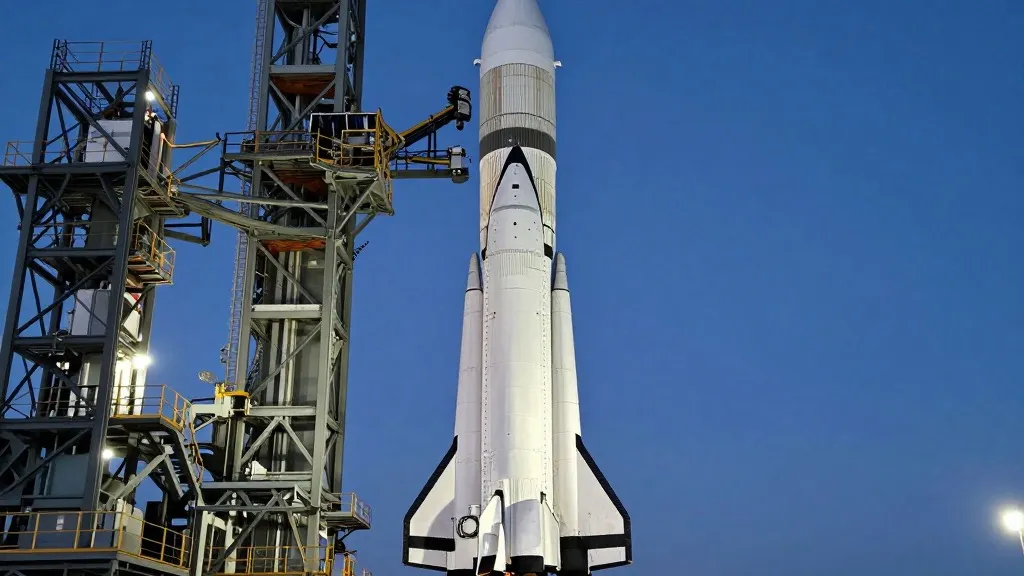
NASA Restructures Moon Landing Roadmap to Hit 2028 Target
Revised architectures for SpaceX and Blue Origin eliminate complex orbital maneuvers, clearing a path for the first crewed lunar surface mission in nearly six decades.
By Emily Carter ·

NASA has fundamentally restructured its approach to returning astronauts to the Moon, resolving long-standing engineering conflicts between the agency and its commercial partners. By simplifying the docking procedures and eliminating unnecessary refueling steps, the space agency aims to lock in a timeline that places humans on the lunar surface as early as 2028. This shift marks a significant departure from previous, more complex architectural plans, signaling a pragmatic turn toward executable engineering solutions.
The changes were unveiled during a lengthy news conference on Friday, where officials provided the first detailed public overview of the revised Artemis Program. While elements of these plans had been previously reported, this briefing served to formally acknowledge substantial alterations to how the different lander systems will operate. The core of the update involves streamlining the interaction between the Orion spacecraft and the lunar landers, removing hurdles that had threatened to delay the mission profile.
To understand the urgency of these changes, one must look at the trajectory of the program over the past year. Earlier this year, NASA canceled the Lunar Gateway project, a decision that inadvertently solved a major technical issue for SpaceX. In meetings with NASA officials in early 2026, SpaceX engineers had pressed to remove the requirement for Orion to dock with the Starship lunar lander in a near-rectilinear halo orbit around the Moon. This specific orbital path required significant energy and presented other difficulties. The cancellation of the Gateway effectively removed the necessity for that complex maneuver, allowing for a simpler approach.
For SpaceX’s Starship vehicle, the revised architecture now dictates that Orion will dock with the lunar lander in high-Earth orbit before the combined vehicle transits to the Moon. This change eliminates the high-energy halo orbit docking, reducing the complexity of the mission. Simultaneously, the plan for Blue Origin has been adjusted to include four launches of its New Glenn rocket, but notably, it no longer requires spacecraft-to-spacecraft refuelings. The Blue Origin configuration also allows for the possibility of its Blue Moon lander rendezvousing with Orion in low-Lunar orbit, offering a flexible alternative to the SpaceX model.
Despite the architectural shifts, the overall schedule remains largely intact, though the margin for error has been narrowed. NASA officials stated on Friday that they continue to anticipate launching the Artemis III mission by the summer of 2027. This mission is designed as a demonstration, involving docking with both the Blue Moon and Starship vehicles near Earth. Following this successful test, the agency is tracking toward a 2028 launch for Artemis IV, which will execute the actual landing on the lunar surface.
NASA Administrator Jared Isaacman emphasized the agency's confidence in the new path. “This is an achievable path we are on right now,” Isaacman said during the presentation. He noted that the agency holds the necessary mandate, resources, and stakeholder support to execute the plan as intended. The leadership team has taken a hard look at every element of the Artemis Program, seeking changes that help the lunar lander companies execute and accelerate their plans.
The next step in this process is the rigorous execution of the 2027 demonstration. If the Artemis III docking test goes according to plan, it will validate the new high-Earth orbit and low-Lunar orbit rendezvous strategies. Success in that window is critical, as it directly underpins the feasibility of the 2028 surface landing. The focus now shifts from architectural debate to operational readiness, with both SpaceX and Blue Origin tasked with proving their revised systems can meet the tighter integration requirements.
As the program moves forward, the question remains whether these streamlined plans can hold to their aggressive dates. The removal of complex orbital mechanics and refueling steps reduces technical risk, but it places a premium on the reliability of the launch vehicles and the precision of the docking maneuvers. With the agency publicly committing to this timeline, the coming eighteen months will serve as the definitive test of whether the revised architecture can deliver on its promise of a 2028 Moon landing.
Source: Ars Technica