Federal Regulators Propose Cyan Lights to Identify Autonomous Vehicles
Federal authorities have put forward a plan to equip autonomous vehicles with blue-green lights to signal that no human is driving.
By Isabella Morales ·
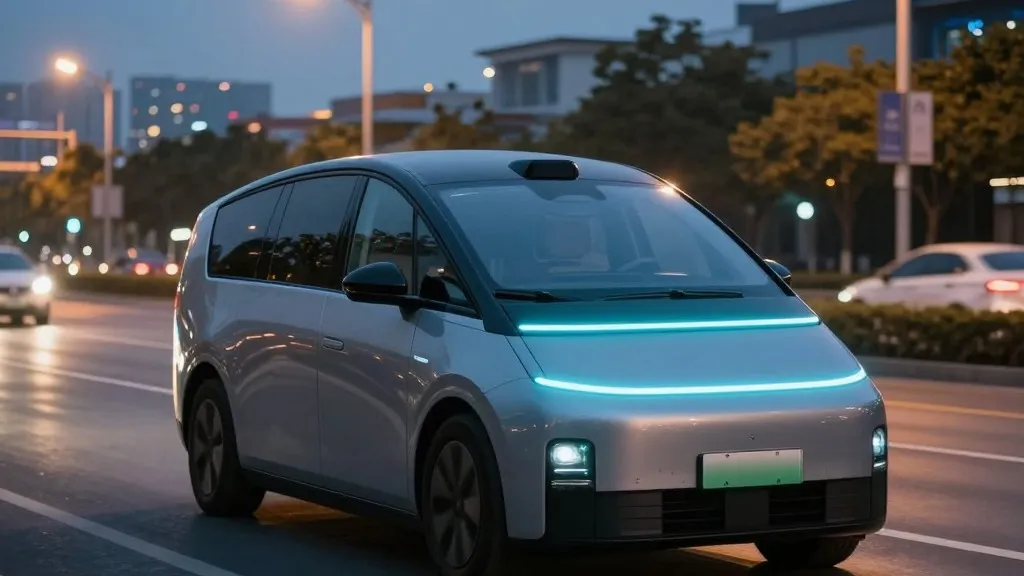
Federal regulators have proposed a standardized method for autonomous vehicles to visually announce their operation: a cyan-colored light. The National Highway Traffic Safety Administration (NHTSA) issued proposed modifications to Federal Motor Vehicle Safety Standard (FMVSS) No. 108, aiming to standardize communication protocols for automated driving systems. This move seeks to create a clear visual distinction between self-driving units and vehicles operated by humans, addressing a long-standing debate regarding how to signal the absence of a driver on the road.
The agency is seeking to implement cyan marker lamps to clearly and consistently signal to law enforcement and other road users when an automated driving system is operating the vehicle. The specific choice of cyan is driven by the existing visual landscape of the road; the automotive industry already utilizes red, amber, white, and flashing blue/red lights for brake indicators, turn signals, headlights, and emergency vehicles. By selecting a blue-green hue, regulators aim to fill a visual gap without causing confusion among road users. There is precedent for this color scheme, as Mercedes-Benz previously received state-level approval for turquoise lights on its Level 3 Drive Pilot cars, though the company has since abandoned that specific feature in favor of a Level 2++ system.
Under the proposed framework, cyan marker lights would remain optional for manufacturers. However, the proposal would establish federal standards for their color, brightness, and location to ensure that any automaker choosing to add them uses a consistent, legal setup instead of a confusing mix of different colors and signals. The agency hopes to establish a uniform standard that robotaxi operators like Waymo, Nuro, and Zoox, as well as automakers like GM and Mercedes, can adopt uniformly. Alongside the signaling proposal, the agency is also proposing to remove requirements for physical hazard switches, manual beam shifters, and turn levers inside vehicles, while updating testing standards to accommodate modern LED architectures.
These regulatory changes align with the Department of Transportation's broader push to streamline AV deployment. The government intends to facilitate the construction of vehicles designed without traditional driver-centric controls, such as steering wheels and pedals. Despite this deregulatory push, regulators continue to enforce existing rules; last month, NHTSA opened an audit query into the Tesla Cybercab. The inquiry examines the process and technical data on which Tesla relied when certifying the Cybercab, specifically regarding the absence of sideview mirrors, pedals, and steering wheels, features currently required under FMVSS.
Source: The Verge